The Joglo is much more than a traditional house; it is a masterclass in Javanese architecture and spiritual philosophy. Originating in Central and East Java, this distinctive building style is characterized by its high, steep roof that rises to a central peak, mimicking the shape of a mountain. In Javanese culture, mountains are sacred places where spirits reside, and the Joglo’s roof is designed to reflect this connection between the earth and the heavens.
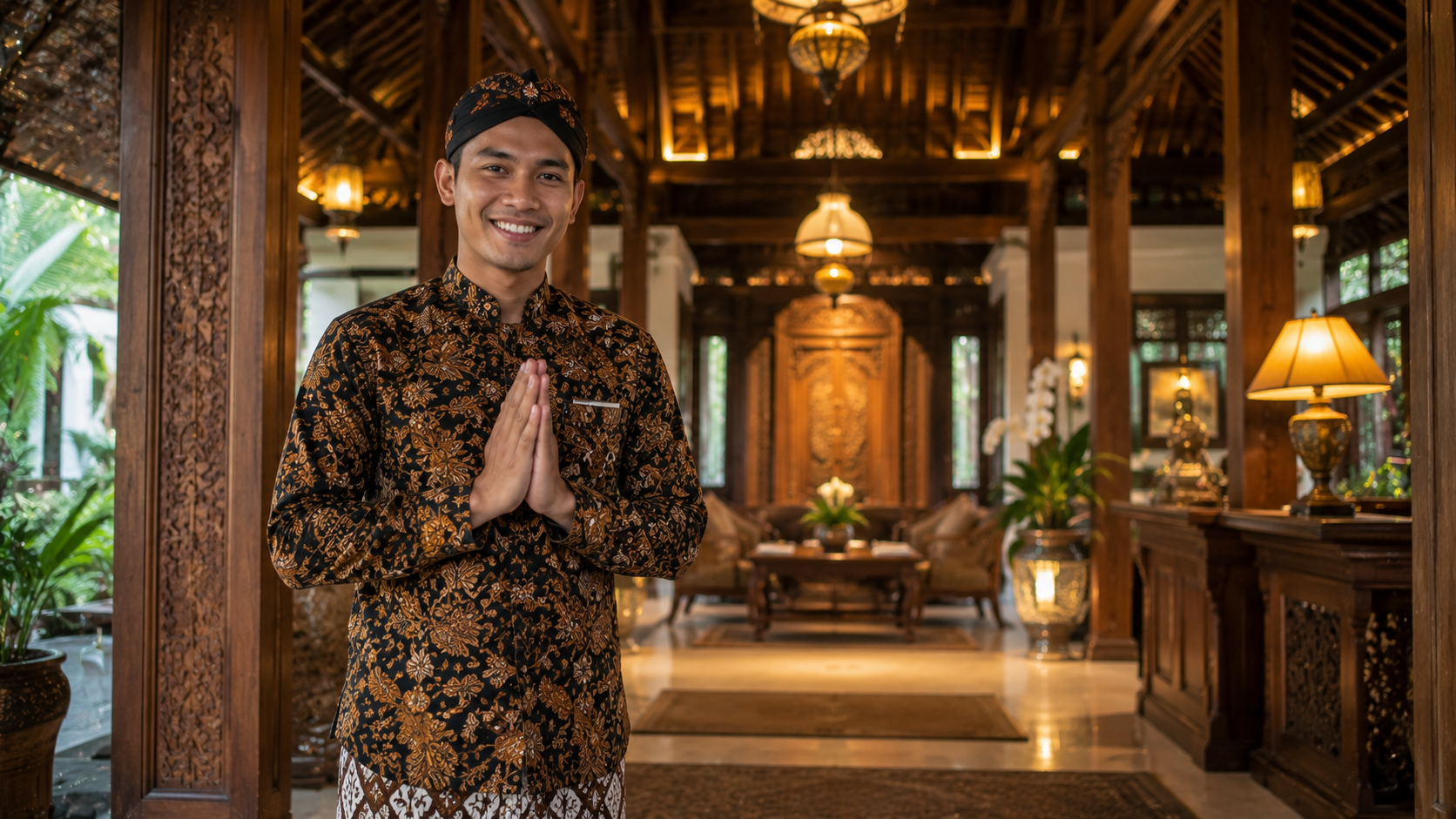
The heart of a Joglo’s structure is the “Soko Guru”—four main wooden pillars that support the entire weight of the high central roof. These pillars are typically carved from solid teak wood and are joined together at the top by a series of interlocking wooden beams known as “Tumpang Sari.” This ingenious construction method relies on joinery rather than nails, allowing the building to remain flexible and resilient against earthquakes, a common natural occurrence in Java. The open-sided pavilion at the front, called the “Pendopo,” is designed to welcome guests, reflecting the Javanese value of hospitality.
Today, Javanese Joglo architecture is experiencing a modern revival. Many resorts, restaurants, and recreation parks in places like Pacet incorporate Joglo structures to create an authentic, rustic atmosphere. By blending traditional wooden craft with modern amenities, these spaces preserve Javanese heritage while showing that ancient designs can be functional and beautiful in the modern world.